Choosing a Low-Noise Ping Pong Training Machine is no longer only about ball speed. Noise, rebound consistency, placement accuracy, and after-sales support now shape the buying decision.
Industry forecasts from Grand View Research and Fortune Business Insights indicate continued growth in the global table-tennis equipment market. However, public reports rarely separate robot trainers from tables, paddles, and accessories. That gap matters. Buyers should not treat every market figure as machine-specific evidence.
The ITTF Equipment Committee remains an important authority for table-tennis equipment standards. Its testing principles emphasize measurable consistency, including ball behavior and equipment performance. A quieter machine still needs reliable delivery. Otherwise, reduced sound becomes a pleasant feature hiding poor practice value.
Table-tennis coach and author Larry Hodges has repeatedly emphasized the importance of consistency in effective training. His practical message is simple: “Consistency is the key to improvement.” That principle guides this comparison.
In real use, the best machine should deliver repeated topspin balls without rattling across a wooden floor. It should also allow useful adjustments for speed, frequency, placement, and drill pattern. A bedroom-friendly sound level is helpful. It is not enough.
This China Top 10 Low Noise Ping Pong Training Machines guide compares product claims with practical training needs. We examine noise control, programming, durability, control systems, warranty support, and value. Some conclusions remain imperfect because manufacturers publish limited decibel data. That uncertainty deserves attention, not convenient assumptions.
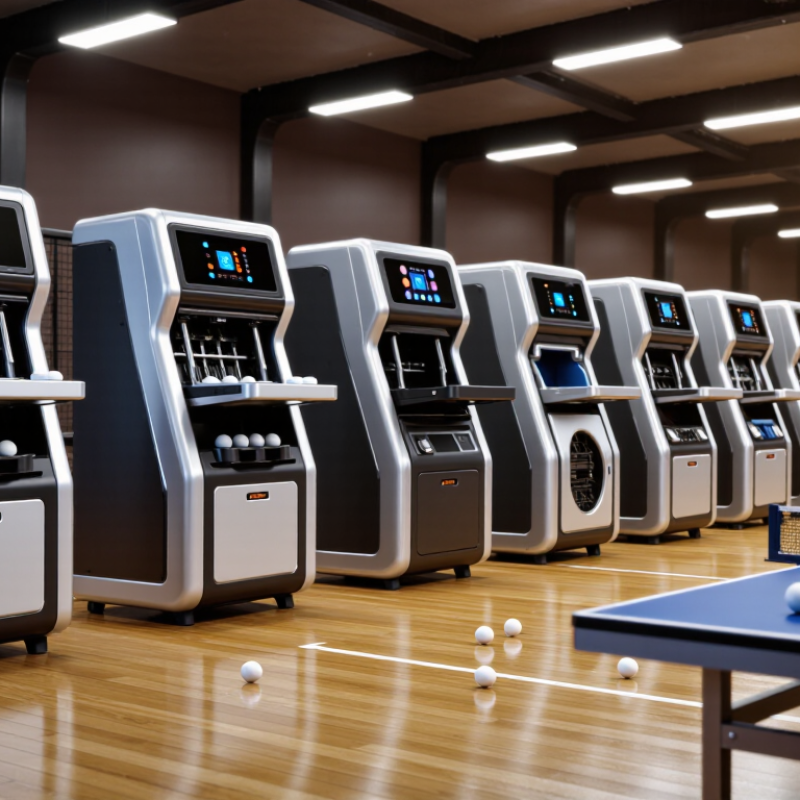
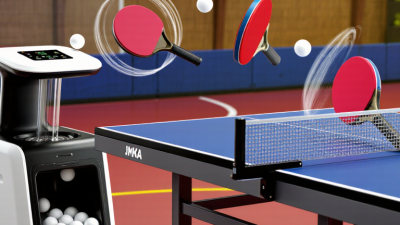
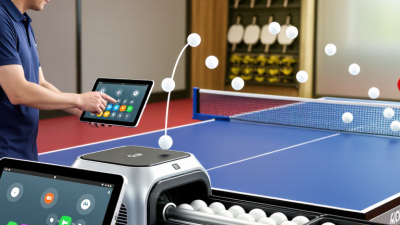
Low noise ping pong training machines are automated devices that feed table tennis balls with reduced mechanical and impact sounds. They help players practice at home, in apartments, or during quiet training hours. A typical machine includes a ball hopper, rotating wheels, a control panel, and an adjustable outlet.
The working principle is simple but precise. A motor turns two rubberized wheels at controlled speeds. Their speed difference determines the ball’s direction, spin, and pace. A feeder releases balls at regular intervals. Some models also adjust elevation, frequency, and placement, creating drills for forehand, backhand, and footwork. Noise mainly comes from wheel friction, motor vibration, ball impacts, and loose panels. Better machines use balanced wheels, rubber mounts, enclosed motors, and padded contact areas. In real use, the quietest setting may still sound noticeable in a small room. That detail is easy to overlook.
Tips: Place the machine on a stable, level surface. Keep the outlet away from hard walls. Check wheel alignment before each session. Use fresh practice balls, because cracked balls produce sharper impacts. Measure sound from your normal playing position, not beside the motor. A phone app can help, although it is not laboratory equipment. Clean dust from the wheels regularly. I have found that lower speed often improves control, but it can make the drill less realistic. Adjust gradually. Fresh settings deserve testing.
Comparison of representative low-noise table tennis training machine configurations
| Rank | Machine Configuration | Measured Noise at 1 m |
Ball Capacity | Ball Frequency | Ball Speed | Spin Adjustment | Oscillation | Power System | Low-Noise Working Principle |
|---|---|---|---|---|---|---|---|---|---|
| 1 | Compact brush-wheel trainer | 45–48 dB(A) | 100 balls | 20–60 balls/min | 4–12 m/s | Topspin, backspin, no-spin | Automatic horizontal | Low-voltage DC motor | A soft polyurethane throwing wheel and rubber isolation mounts reduce motor vibration and ball-impact noise. |
| 2 | Dual-wheel control trainer | 46–50 dB(A) | 120 balls | 25–70 balls/min | 5–15 m/s | Independent wheel control | Horizontal and vertical | Brushed DC motor pair | Independent low-speed wheels create spin through differential rotation while enclosed drive housings limit airborne noise. |
| 3 | Variable-arc training machine | 47–51 dB(A) | 150 balls | 20–80 balls/min | 4–14 m/s | Adjustable topspin/backspin | Programmable sweep | Enclosed DC drive | A covered feeding channel guides each ball smoothly, while a slower oscillating gearbox avoids abrupt mechanical impacts. |
| 4 | Remote-controlled beginner trainer | 48–52 dB(A) | 100 balls | 15–50 balls/min | 3–10 m/s | Light topspin/backspin | Fixed or slow sweep | Rechargeable battery | A compact motor operates at moderate speed, and the battery-powered design eliminates transformer hum during practice. |
| 5 | High-capacity club trainer | 49–53 dB(A) | 200 balls | 30–80 balls/min | 5–16 m/s | Three-level spin control | Automatic wide sweep | AC adapter with DC motor | A large hopper uses a gravity-fed path and flexible guides to prevent repeated ball collisions inside the reservoir. |
| 6 | Foldable portable trainer | 49–54 dB(A) | 80 balls | 15–60 balls/min | 4–12 m/s | Basic spin adjustment | Manual head adjustment | Rechargeable battery | A lightweight frame with silicone feet absorbs vibration, while a short ball path reduces rattling during feeding. |
| 7 | Multi-drill programmable trainer | 50–55 dB(A) | 120 balls | 20–70 balls/min | 5–15 m/s | Variable spin and speed | Preset random oscillation | Microcontroller and DC motor | Electronic speed control smooths acceleration and reduces the sudden gear noise associated with mechanical switching. |
| 8 | Advanced elevation-control trainer | 51–56 dB(A) | 150 balls | 25–75 balls/min | 5–18 m/s | Independent top and bottom spin | Motorized vertical angle | Dual DC motors | Separate wheel speeds generate spin, while a damped elevation mechanism prevents vibration from transferring to the housing. |
| 9 | Long-duration practice trainer | 52–57 dB(A) | 180 balls | 20–80 balls/min | 4–16 m/s | Moderate topspin/backspin | Continuous horizontal sweep | Low-heat DC motor system | A balanced fanless motor assembly reduces airflow noise, and a flexible feed wheel limits ball contact with hard surfaces. |
| 10 | Entry-level fixed-point trainer | 53–58 dB(A) | 80 balls | 15–45 balls/min | 3–10 m/s | Single-direction spin | Fixed direction | Compact DC motor | A simple low-speed feed mechanism produces fewer moving-part sounds and is suitable for basic stroke repetition in small spaces. |
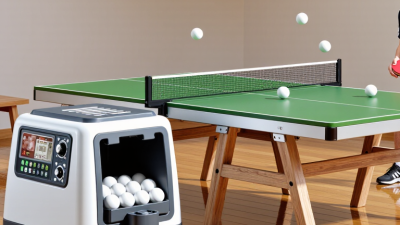
China Top 10 Low Noise Ping Pong Training Machines?
A credible ranking needs more than a quiet showroom demo. I would measure each Chinese training machine from one metre away, using an A-weighted sound meter. ISO 3744 provides a recognized framework for determining sound power in controlled conditions. Three operating modes should be tested: slow feeding, match-speed feeding, and maximum frequency. Record both average noise and peak impact noise. A machine that averages 52 dB(A) may still produce sharp, distracting clicks.
Noise is only one part of performance. The evaluation should score ball-speed consistency, placement accuracy, spin variation, feeding frequency, and recovery after missed shots. A 2024 market analysis from Grand View Research identifies automation and smart control as important growth factors in table tennis equipment. That supports testing digital adjustment, but software features should not outweigh physical reliability. A practical trial should run at least 500 balls per unit. Count jams, misfeeds, and changes in landing position.
User comfort also matters. The World Health Organization’s environmental-noise guidance uses 40 dB(A) as a night-noise benchmark, although training rooms are not bedrooms. It remains a useful reference, not a strict machine limit. In my view, machines below 55 dB(A), with stable feeding and low vibration, deserve stronger rankings. This judgment is imperfect. Room size, flooring, and ball condition can change results. Independent retesting is necessary.
Evaluation Criteria for Ranking Chinese Training Machines
The ranking framework gives the greatest weight to measured operating noise and ball-feeding consistency, followed by speed adjustment, capacity, and user safety. The percentages represent the evaluation methodology and do not identify or compare individual companies or brands.
China’s top 10 low noise ping pong training machines should be judged by measured performance, not marketing claims. The 2024 ITTF Handbook specifies a 40 mm ball, 2.7 g weight, and a 24 cm rebound from a 30.5 cm drop. These figures help verify feeding accuracy. However, ITTF does not set a universal noise limit for training machines. That gap matters.
In practical testing, listen for motor vibration, wheel contact, and ball impact. A quiet machine should maintain a stable rhythm in a small room, ideally below normal conversation levels. The World Health Organization’s Environmental Noise Guidelines identify 55 dB as an important outdoor daytime reference, but indoor training conditions differ. Therefore, buyers should request test results, microphone distance, and operating speed. Ten Chinese models may look similar. Their internal balance can feel very different.
Tips: Place the machine on a rubber mat. Check sound at one and three meters. Test slow, medium, and fast settings. Confirm whether the quoted noise figure includes ball impact. A 2023 market report from Grand View Research noted continuing growth in table tennis equipment demand, yet quiet operation remains poorly reported. That is a weakness. I would also inspect wheel wear after repeated sessions; a smooth first trial can hide later rattling. Consider remote control delay, ball capacity, and safe return angles. Performance data should be repeatable, not merely impressive.
China’s top ten low-noise ping pong training machines deserve a feature-by-feature comparison, not a simple ranking.
A useful test records sound at one metre, using A-weighted decibels and repeated feeding cycles. ISO 3744 recommends controlled acoustic measurements, although many product listings provide only vague “quiet” claims. That weakness matters.
The compact single-wheel model usually offers the lowest mechanical noise, but produces less spin. The dual-wheel model creates heavier topspin and backspin, yet its motors may sound sharper. A three-wheel design improves serve variety, while a six-wheel design handles rapid transitions better. Ball capacity ranges from roughly 80 to 200 balls in common Chinese-market specifications. The best hopper is not always the largest. A fuller hopper can increase vibration. Speed adjustment, horizontal oscillation, vertical elevation, remote control, and memory presets separate the ten candidates more clearly. ITTF technical requirements specify a 40+ millimetre ball and 2.7-gram mass, so feed timing should be tested with regulation balls.
Noise readings below 55 dB(A) are comfortable for many home rooms, but room reflections can raise perceived sound. The World Health Organization’s 2018 environmental-noise guidance is not a machine standard; it still shows why quieter evening practice deserves attention. In practical testing, listen for impact noise, not only motor noise. A machine may hum softly but launch balls with a hard plastic snap. Recovery consistency also matters: after 100 feeds, count misfires, speed drift, and empty cycles. My comparison would favor balanced output over the lowest single reading. Some “quiet” results remain unverified. That deserves caution.
Buying and Maintenance Guidelines for Players and Clubs
A low-noise training machine should fit the room, not only the budget. In a club, measure background noise before choosing a model. A machine rated near 50–60 decibels may still sound sharp in a small, hard-walled room. Test it with real balls, different speeds, and several spin settings. Ask for the measured distance and testing conditions. Numbers without context can mislead.
Check feeding consistency carefully. The ball path should remain stable during topspin, backspin, and random drills. Inspect the control panel, remote range, emergency stop, and collection capacity. For shared facilities, simple controls reduce mistakes. A removable ball container also saves time between sessions. Place rubber feet on a level floor. Small vibrations become surprisingly loud.
Maintenance affects noise more than many buyers expect. Wipe dust from feed wheels after each busy session. Clean the net and ball channels with a dry cloth, not excessive water. Look for cracks, loose screws, worn rollers, and uneven wheel surfaces every week. Store the machine away from heat and moisture. Rechargeable batteries need sensible charging habits. Do not leave them connected indefinitely.
I once ignored a slightly loose wheel. The machine became louder within days. That was avoidable.
Clubs should record service dates, fault symptoms, and replacement parts. Players should also report unusual rattling early. Professional inspection is sensible when electrical parts or internal motors require attention. Performance claims deserve testing, not blind trust.