Inquiry
Form loading...
-
Phone
-
E-mail
-
Whatsapp
-
Whatsapp



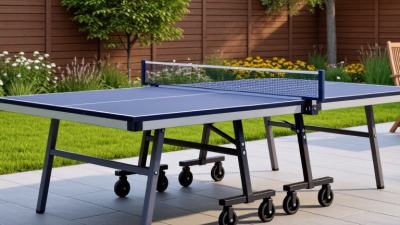
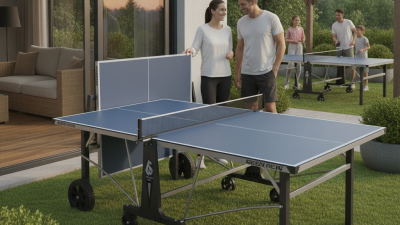
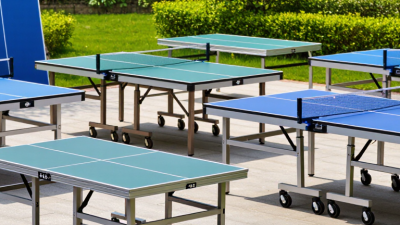
Choosing the right Outdoor Fold Up Ping Pong Table requires more than comparing prices and colorful product photos. A useful table must handle uneven patios, sudden wind, damp grass, and repeated folding. Its playing surface should remain consistent, while the frame should lock firmly without feeling heavy or fragile. Small details matter. Wheel quality, storage size, net adjustment, and warranty support can change the entire buying experience.
Richard McAfee, a respected table tennis coach and USATT Hall of Fame inductee, says, “Good equipment should help players improve, not distract them.” That principle guides this selection of top Outdoor Fold Up Ping Pong Table options. A stable rebound helps beginners develop control. A reliable folding system makes family play easier. Weather-resistant materials also deserve attention, but no outdoor table is truly maintenance-free. Even strong coatings can fade under constant sunlight.
Real-world use can be less perfect than product descriptions suggest. Some tables fold smoothly but require two people to move. Others roll easily yet wobble on rough paving. I have found that advertised portability sometimes hides awkward storage dimensions. That deserves careful reflection. Buyers should measure their garage, patio, and doorway before ordering. They should also inspect hinge protection, wheel brakes, leg adjusters, and surface thickness. This guide focuses on practical performance, durability, safety, and value. It is designed to help shoppers find a table that fits their space, playing habits, and expectations.
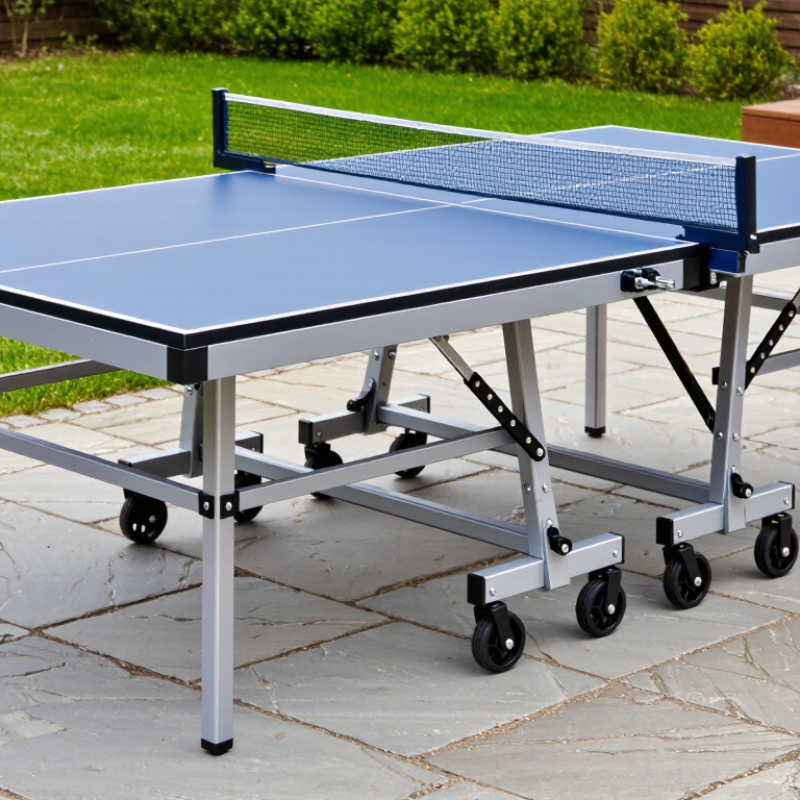
A quality outdoor fold-up ping pong table must handle more than an occasional sunny game. Its playing surface needs a weather-resistant coating and a stable core. Thin panels can warp after repeated heat and moisture exposure. Check the underside for sealed edges, not just a glossy top.
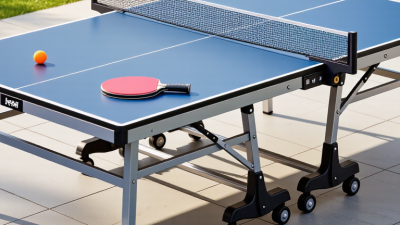
Stability matters during real play. I look for a rigid frame, secure leg locks, and wide wheels with reliable brakes. The table should fold smoothly without trapping fingers or twisting the panels. A level bounce is essential, so place a ball near the center and corners during inspection. Uneven rebounds often reveal weak construction. Small details matter.
Outdoor does not mean permanently uncovered. I once left a table under a balcony, expecting enough protection. Dust and damp air still affected the hinges. A fitted cover, dry storage area, and regular cleaning can extend its useful life. Locking halves should meet evenly after folding. If they sag, carrying becomes awkward and setup takes longer. I also prefer adjustable feet for patios and slightly uneven ground. Some buyers focus heavily on net quality, but a durable table frame usually deserves more attention. Check replacement-part availability and the written warranty before purchasing. Even strong materials can fail when storage habits are careless.
| Evaluation Dimension | Quality Outdoor Standard | Why It Matters | What to Check Before Purchase |
|---|---|---|---|
| Playing Surface Size | Approximately 2.74 m long × 1.525 m wide × 0.76 m high when assembled | These are the official table-tennis playing dimensions, allowing consistent practice and play. | Confirm the assembled dimensions and make sure the table is not advertised only by its folded size. |
| Tabletop Construction | Weather-resistant tabletop with a smooth, low-glare finish and reinforced underside | Outdoor surfaces must resist moisture, sunlight, warping, and inconsistent ball bounce. | Look for sealed edges, UV-resistant coating, water-resistant materials, and a manufacturer-stated surface thickness. |
| Surface Thickness | Around 5–7 mm for a portable outdoor table, with adequate support underneath | A thicker, well-supported panel generally provides better rebound consistency and rigidity. | Check whether the stated thickness refers to the playing panel alone or the complete tabletop assembly. |
| Fold-Up Design | Two independently foldable halves with secure locking mechanisms | Independent folding supports compact storage and solo practice using one raised half. | Verify that each half locks securely in both the playing and folded positions. |
| Frame and Undercarriage | Corrosion-resistant steel or aluminum frame with reinforced crossbars | A rigid frame helps keep the playing surface level and improves long-term durability outdoors. | Inspect welds, frame joints, leg braces, and protective coatings; avoid visibly thin or flexible supports. |
| Wheel System | Large swiveling wheels with reliable brakes on a substantial portion of the wheels | Larger wheels move more easily over outdoor surfaces, while brakes reduce unwanted movement during play. | Check wheel diameter, swivel action, brake access, and compatibility with the storage surface. |
| Leveling Adjustments | Adjustable leg levelers or height-compensation feet | Outdoor patios, driveways, and lawns are rarely perfectly level. | Confirm that the adjustment range is practical and that the feet remain stable under load. |
| Net and Post Assembly | Weather-resistant net with adjustable tension and secure posts | A straight, properly tensioned net is essential for accurate play and reliable setup. | Look for height adjustment, easy installation, rust-resistant posts, and replacement-net availability. |
| Wind Stability | Wide support base, locking wheels, and a stable center frame | Fold-up tables are portable but can become unstable in strong wind or on uneven ground. | Check the operating instructions and never leave the table outdoors in severe weather or strong wind. |
| Storage Footprint | Compact folded profile that fits the intended garage, shed, or covered patio | A table that cannot be stored conveniently is more likely to be exposed to damaging weather. | Measure doorways, storage height, folded width, folded depth, and clearance for moving the table. |
| Assembly Requirements | Clear instructions, labeled hardware, and minimal final assembly | Correct assembly affects levelness, folding safety, and the table’s structural performance. | Review the assembly time, required tools, number of people recommended, and parts-support policy. |
| Weather Protection | Designed for outdoor use but stored under cover when not in use | Outdoor-rated does not mean permanently waterproof; prolonged exposure can shorten product life. | Use a fitted cover and store the table in a dry, shaded, or covered area whenever possible. |
| Safety Features | Automatic or manual locking systems, pinch-point protection, and stable legs | Foldable equipment can create injury risks if panels or legs move unexpectedly. | Test every lock, keep hands clear of hinges, and follow the opening and closing instructions. |
| Warranty and Replacement Parts | Written coverage for the frame, surface, wheels, net, and commonly replaceable hardware | Parts availability can determine whether the table remains usable after normal wear. | Check warranty duration, exclusions for weather damage, return terms, and availability of nets, wheels, and locks. |
| Priority | Recommended Requirement | Suitable For |
|---|---|---|
| Essential | Official playing dimensions, secure folding locks, level-adjustment capability, and weather-resistant construction | Regular recreational play and family use |
| Highly Recommended | Locking swivel wheels, independent table halves, reinforced frame, and adjustable net tension | Frequent setup, solo practice, and uneven outdoor areas |
| Best Long-Term Value | Replaceable wheels and net, protective cover compatibility, corrosion-resistant hardware, and clear warranty terms | Users seeking durability and lower maintenance costs |