Best Olympic Standard Table Tennis Balls for Competitive Play?
In competitive table tennis, the choice of equipment can significantly impact performance. Olympic Standard Table Tennis Balls are essential for players striving for excellence. According to a study by the International Table Tennis Federation (ITTF), these balls meet rigorous standards for weight, bounce, and durability.
Players often face challenges when selecting the right ball. Not all brands adhere to the same quality standards. The ITTF reports that consistent ball quality can enhance a player’s game. Choosing an Olympic standard ball ensures superior playability. However, many players overlook the nuances of ball design, which can affect gameplay.
Often, players express frustration over the variations in ball performance. Subpar balls can lead to inconsistent spins and unpredictable bounces. This inconsistency can affect match outcomes. Recognizing the importance of Olympic Standard Table Tennis Balls is a vital step in competitive training. Ultimately, investing in the right equipment can make a tangible difference on the court.

Understanding Olympic Standard Table Tennis Balls
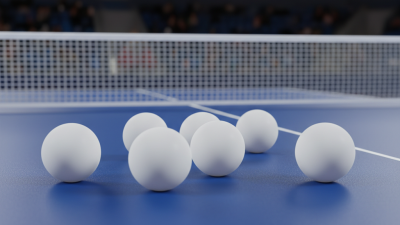
When considering Olympic standard table tennis balls, players must understand their specific requirements. These balls are typically made from high-quality plastic, which impacts their durability and gameplay. According to the ITTF (International Table Tennis Federation), the standard ball used in competitions must have a diameter of 40mm and weigh 2.7 grams. This precise measurement is crucial for maintaining the game's integrity and performance.
The bounce characteristics of these balls are also essential. Studies indicate that a proper bounce height should range between 23cm to 26cm when dropped from a height of 30.5cm. This means that the ball must react consistently across various playing surfaces. However, not all “Olympic standard” balls perform identically. Players have noted inconsistencies in spin and speed, leading to reflections on the importance of ball selection.
Players often find it challenging to adapt to different brands or types, which may behave differently during play. This inconsistency can affect performance in crucial match situations. Testing multiple balls in practice can be beneficial, as it highlights personal preferences and playing style adaptability. Understanding the physical properties and variations among Olympic standard table tennis balls is key to achieving competitive success.
Best Olympic Standard Table Tennis Balls for Competitive Play
| Model |
Diameter (mm) |
Weight (g) |
Material |
Bounce Test (cm) |
Color |
| Ball A |
40 |
2.7 |
Plastic |
23 |
White |
| Ball B |
40 |
2.7 |
Celluloid |
24 |
Orange |
| Ball C |
40 |
2.7 |
Plastic |
22 |
White |
| Ball D |
40 |
2.7 |
Celluloid |
24.5 |
Orange |
Key Features of Competitive Table Tennis Balls
When it comes to competitive table tennis, selecting the right ball is crucial. High-quality table tennis balls meet stringent standards set by the International Table Tennis Federation (ITTF). According to recent industry reports, these balls must have a diameter of 40mm and weigh 2.7 grams, ensuring they provide the necessary bounce and speed for competitive play.
Key features include seamless construction, which enhances durability and consistency. Research from sports science journals highlights that a seamless ball delivers better spin and control. Additionally, a high-gloss finish helps improve visibility for players and spectators alike. Recent studies indicate that well-designed balls can significantly influence match outcomes, emphasizing the importance of quality.
However, not all balls are created equal. Some players report inconsistency in performance due to manufacturing variances. In professional settings, even minor discrepancies can negatively affect gameplay. Players often find themselves reassessing their equipment to ensure they are using the best possible tools for success. This highlights the need for thorough testing and feedback from experienced athletes. Ultimately, the right choice in table tennis balls can make a substantial difference on the court.
Best Olympic Standard Table Tennis Balls for Competitive Play
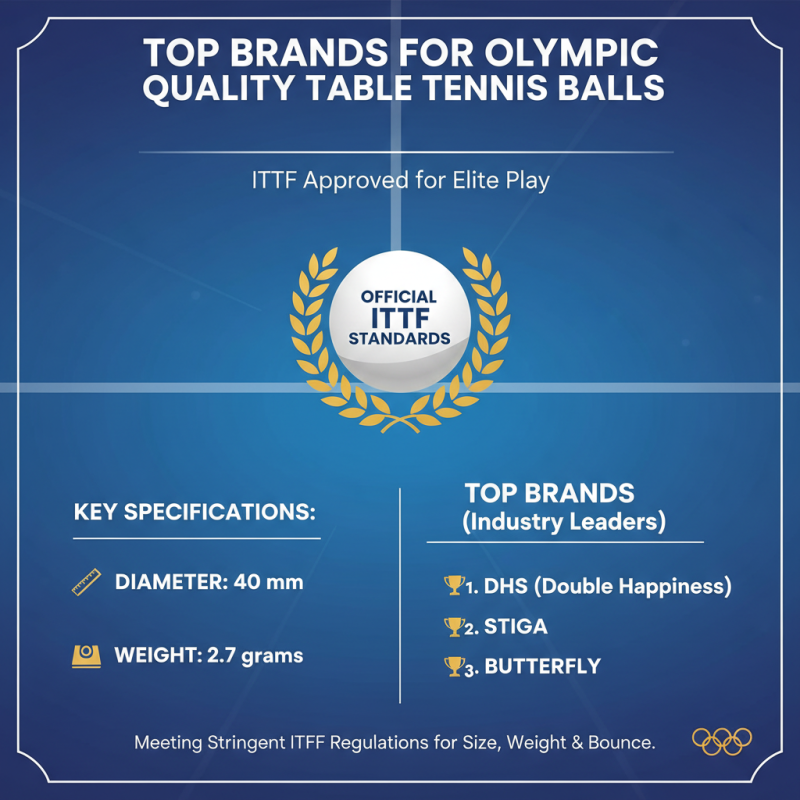
Top Brands for Olympic Quality Table Tennis Balls
When choosing the best Olympic standard table tennis balls for competitive play, the brand and quality matter significantly. Industry reports highlight that only a few brands meet the stringent regulations set by the International Table Tennis Federation (ITTF). According to the ITTF, the official balls must have a specific size, weight, and bounce characteristics. Typically, they must measure 40 mm in diameter and weigh exactly 2.7 grams.
Leading manufacturers often invest heavily in research and development to refine their products. A recent study revealed that high-quality balls can influence players' performance by up to 10%. Experts emphasize that consistent bounce and spin are critical for advanced players. Balls with a uniform surface reduce errors and enhance gameplay, factors worth considering during selection.
Players should also be aware of potential biases based on personal preferences. Some may favor a certain type based on their playing style, while others might struggle with adaptability. An often-overlooked aspect is the wear and tear on balls during competitive play. Even the best will degrade over time, impacting performance. Choosing the right ball is about finding a balance between brand reputation and individual performance needs.
Maintenance Tips for Optimal Performance of Table Tennis Balls
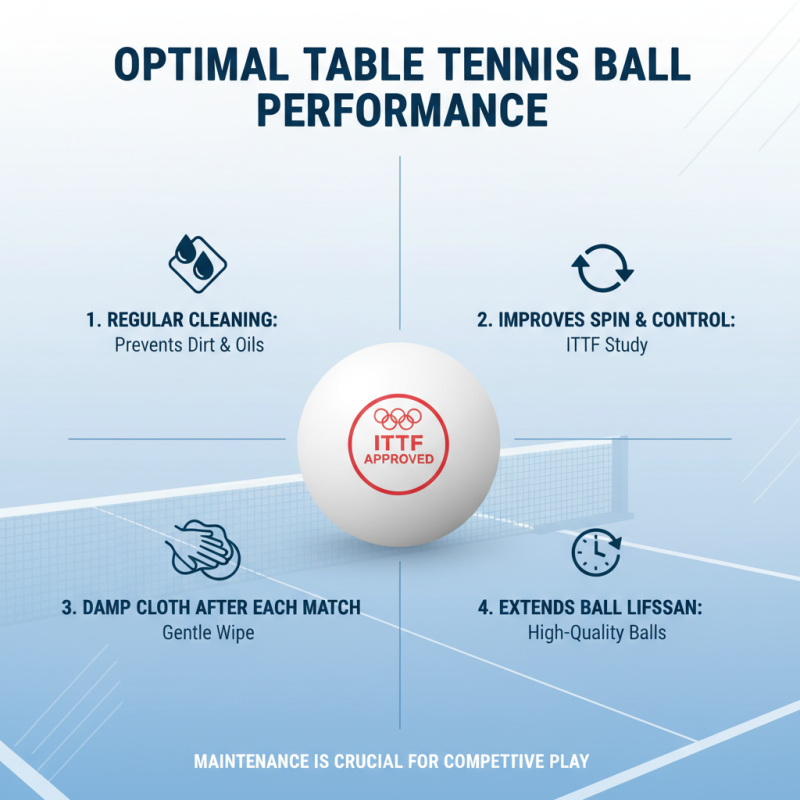
Maintaining the quality of Olympic standard table tennis balls is crucial for competitive play. Regular cleaning is essential to prevent dirt and oils from affecting their performance. A study by the International Table Tennis Federation indicates that clean balls improve spin and control. Players should gently wipe their balls with a damp cloth after each match. Routine maintenance can extend the lifespan of high-quality balls significantly.
Storage conditions also play a vital role in performance. Table tennis balls should be kept in a cool, dry place. Extreme temperatures can warp the plastic, leading to inconsistent bounce. A report from the Sports Equipment Manufacturing Association suggests that temperature control can affect the balls' physical properties within just a few days. Additionally, using a dedicated case prevents accidental damage while providing a controlled environment.
Players should routinely check their balls for signs of wear, such as dents or discoloration. Dents can result in unpredictable bounces during play, undermining performance. Make it a habit to inspect your equipment before competitions. Reflecting on these maintenance practices can lead to better performance during matches. Understanding how these factors influence the game is vital for any serious table tennis player.
Comparative Analysis of Popular Olympic Table Tennis Balls
When choosing the best Olympic standard table tennis balls, players must consider various factors.
The material, weight, and bounce are crucial for competitive play. Most high-quality balls have a consistent seam and optimal roundness, which greatly affects performance.
Players often report varying experiences with different brands, questioning if cost always equals quality.
For those new to the game or looking to upgrade, here are some tips: check the ball's certification for official tournaments.
Standard 40mm balls are ideal, as they comply with international regulations.
Test several options to find one that offers the right feel and control. You want a ball that responds well without sacrificing speed.
Players sometimes overlook the importance of ball care. Balls can lose their performance over time.
Keep them clean and store them in a controlled environment. A good practice is to rotate between multiple balls during training sessions.
This helps players adapt to subtle differences and improves overall performance.